

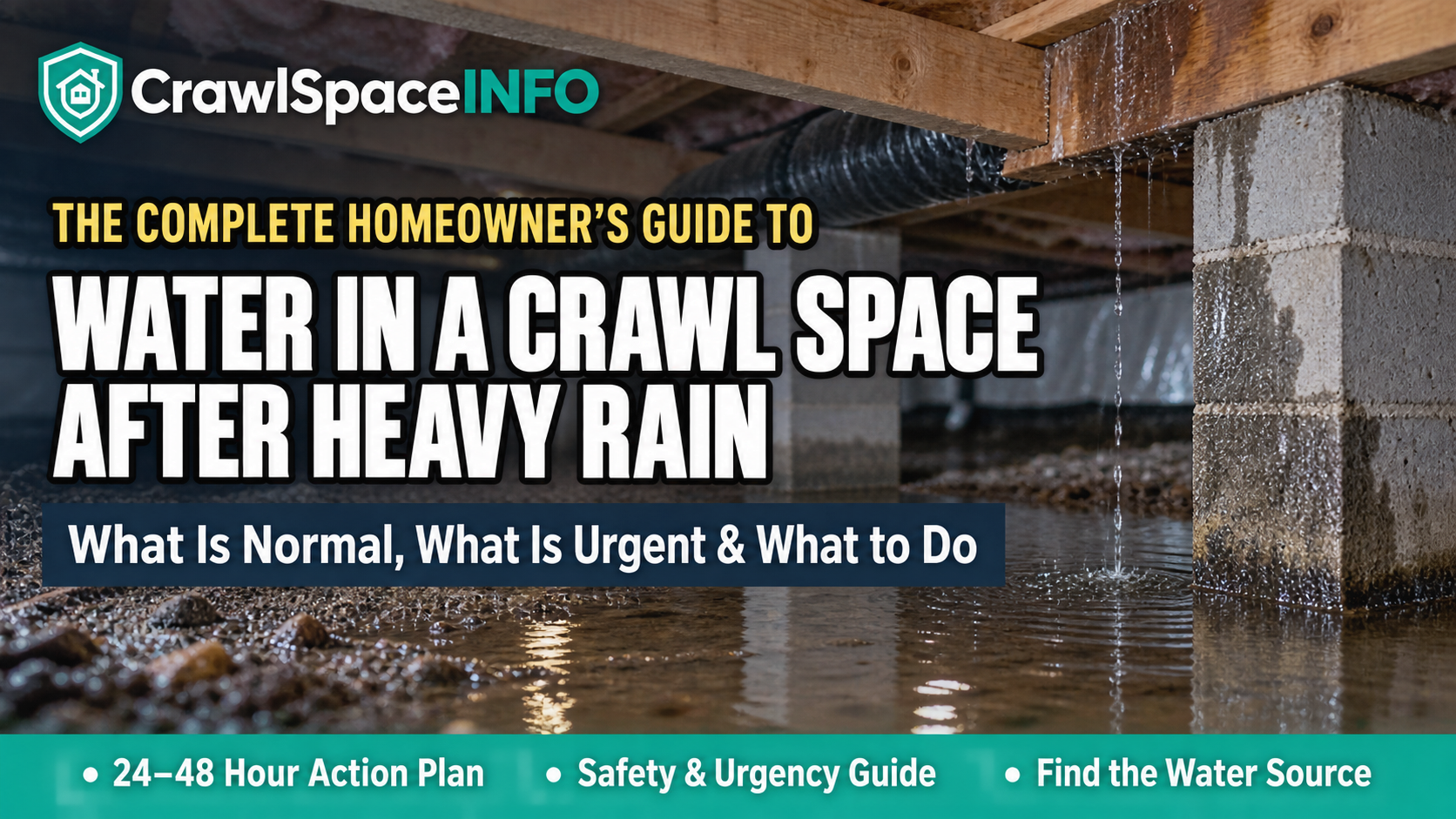
Water in crawl space after heavy rain: even if the water later disappears, it is evidence of a drainage or moisture problem. Use the timing, location, depth, and condition of the water to decide what is safe to monitor and what requires action now.
Quick Answer
A little temporary dampness after an exceptional storm is less urgent than several inches of standing water, but recurring crawl-space water is not normal. Stay out if water may contact electricity, sewage or other contamination is present, or framing appears unstable. If it is safe, document the water, inspect gutters and downspouts, look for exterior ponding, remove clean standing water, and begin drying wet materials promptly. Fix the entry path before buying a dehumidifier or encapsulation system.
Not Sure Whether to Monitor or Act?
Answer a few questions about water depth, timing, recurrence, odors, electrical risks, and visible damage.
Is Water in a Crawl Space After Heavy Rain Normal?
Recurring standing water should not be accepted as normal. An isolated patch of damp soil after unusually severe rain may dry without obvious damage, but it still tells you that water reached the crawl space. Repeated puddles, saturated soil, water lines on walls, wet insulation, or damp wood indicate a condition that needs diagnosis.
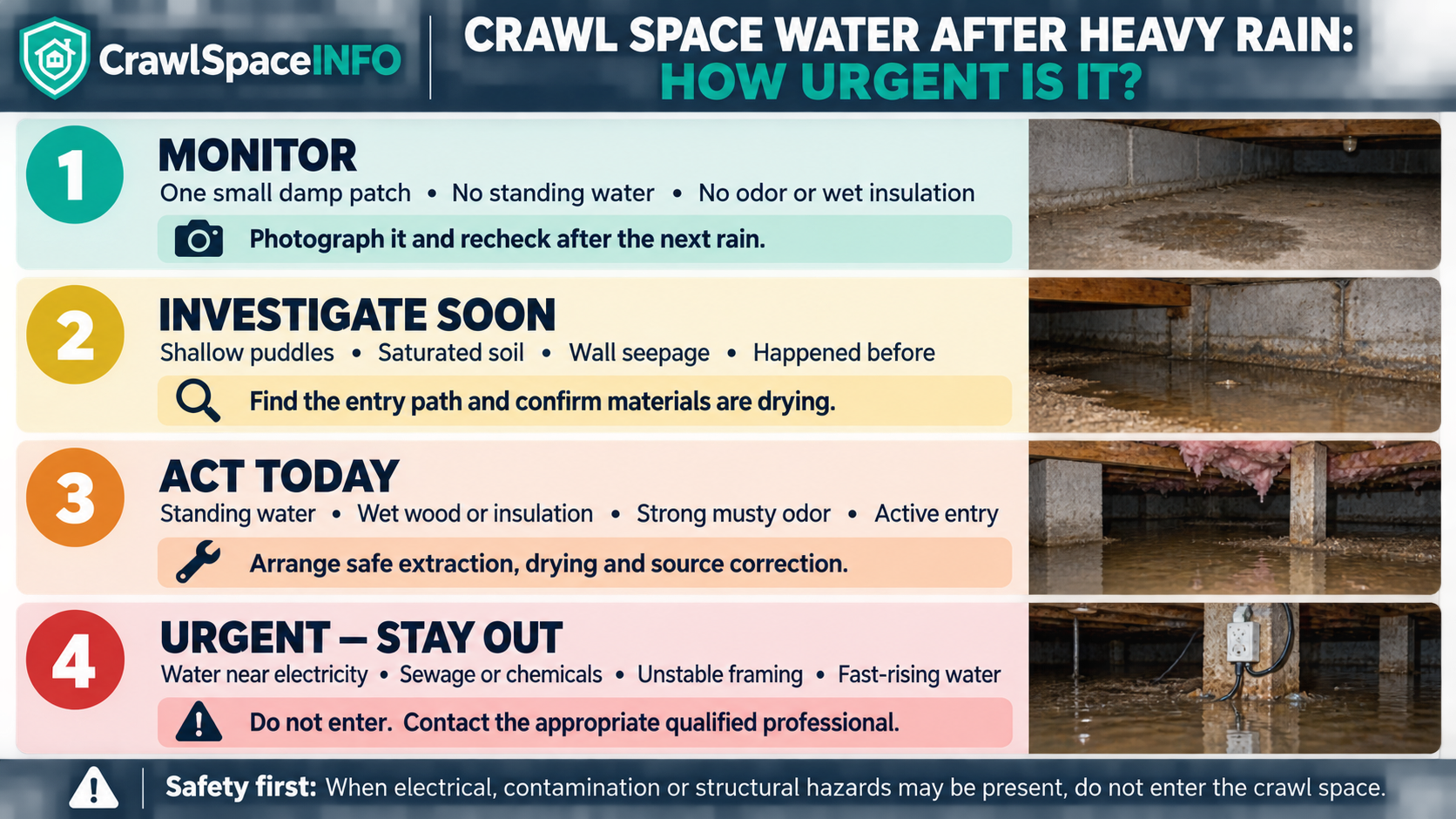
Use this four-level triage table to choose the next step. It is a practical guide, not a substitute for inspecting the actual property.
| Level | What You See | What to Do |
|---|---|---|
| Monitor | A small damp area after one exceptional storm; no standing water, odor, wet insulation, or visible damage | Photograph it, check exterior drainage, and recheck after the next rain. |
| Investigate soon | Shallow puddles, saturated soil, wall seepage, or water that has appeared more than once | Identify the entry path, correct obvious runoff problems, and confirm that materials are drying. |
| Act today | Standing water, soaked insulation, wet wood, strong musty odor, active entry, or water remaining after the storm | Stop safe-to-correct sources, arrange extraction and drying, and obtain professional help if the area is extensive or inaccessible. |
| Urgent—stay out | Water near wiring or equipment, sewage or unknown contamination, fuel or chemical odor, unstable framing, or fast-rising water | Do not enter. Contact the appropriate emergency, utility, remediation, plumbing, electrical, or structural professional. |
What to Do in the First 24–48 Hours
The 24–48-hour period is a drying target, not a promise that mold begins at one exact hour. The U.S. Environmental Protection Agency recommends drying water-damaged materials within 24–48 hours when possible and fixing the moisture source.
- Protect people first. Keep out of water with possible electrical, sewage, chemical, animal, or structural hazards.
- Record the condition. Photograph the water before disturbing it and note the date, storm, depth, location, odor, and apparent entry point.
- Stop an obvious safe source. Correct gutter overflow or a disconnected downspout only when it can be done safely.
- Remove clean standing water. Use suitable extraction equipment only when electrical and contamination risks have been ruled out.
- Dry affected materials. Wet insulation and debris may need removal; wood and masonry can remain damp after puddles disappear.
- Confirm the cause. Do not treat pumping out the water as the permanent repair.
For more detail on all water sources and repair systems, see the Water in Crawl Space homeowner guide.
Why Did the Crawl Space Flood After Heavy Rain?
The timing points toward rain, but it does not prove the exact pathway. Several sources can occur at the same house.
| Pattern or Clue | More Likely Source | First Place to Check |
|---|---|---|
| Wet near one wall after roof runoff | Gutters, downspouts, grading, or surface drainage | Overflow, discharge points, low soil, patios, and ponding beside that wall |
| Water rises through soil or appears broadly across the floor | Seasonal groundwater or high water table | Lowest areas, existing drains, sump basin, and whether the pattern repeats seasonally |
| Water continues in dry weather or below a kitchen/bathroom | Plumbing leak | Supply pipes, drains, fixtures, water heater, and water-meter activity |
| Drips below HVAC equipment or cold ducts | Condensate leak or condensation | Condensate line, drain pan, insulation, and indoor humidity |
| Dirty water, sewage odor, or neighborhood flooding | Contaminated floodwater or sewer involvement | Do not enter; arrange professional evaluation and cleanup |
If water remains when the weather is dry, use the separate Water Leak Under House guide to check plumbing and mechanical sources.
What Can a Homeowner Safely Check?
Start outside. Many rain-related problems can be observed without entering the crawl space.
- Are gutters overflowing, leaking at joints, or pulling away from the roofline?
- Do downspouts empty beside the foundation or into a blocked underground line?
- Does soil, mulch, a patio, or a walkway slope toward the house?
- Are puddles forming beside a particular foundation wall or crawl-space opening?
- Are vents, access doors, utility penetrations, or masonry joints allowing visible entry?
- Does the sump pump run, discharge away from the foundation, and have backup protection?
If conditions are safe and the crawl space can be viewed from the access opening, look for fresh sediment, water tracks, wet insulation, stains, and the deepest area. The deepest puddle is not always the entry point because water can travel along soil, pipes, liners, and framing.
Should You Pump the Water Out?
Clean, shallow water in a demonstrably safe area may sometimes be removed with a wet/dry vacuum or suitable utility pump. Several inches of water, rapid inflow, contamination, uncertain electrical conditions, difficult access, or a large affected area calls for professional help.
Extraction is only the emergency step. Afterward, wet debris or insulation may need removal, affected materials must be dried, and the water pathway must be corrected. A surface that looks dry can still contain moisture.
Why a Dehumidifier Is Not the First Action
A crawl-space dehumidifier controls moisture in the air; it does not remove standing water or stop water entering during storms. Running one against an active leak or recurring groundwater wastes energy and can conceal the need for drainage work.
Use this order: protect people, stop or collect bulk water, remove standing water, dry materials, then control ongoing humidity. A dehumidifier may be useful after drainage is controlled, especially in a properly sealed or encapsulated crawl space.
What Is Reasonable DIY—and When Should You Call a Professional?
Reasonable homeowner tasks
- Photographing the pattern from a safe location
- Cleaning accessible gutters safely
- Correcting an obvious disconnected downspout
- Moving discharge away from the foundation where allowed
- Monitoring the same locations after later storms
Professional evaluation is appropriate when
- Water is recurring, deep, fast-moving, or widespread
- The source remains uncertain after basic exterior checks
- Electrical equipment, sewage, chemicals, mold, pests, or structural damage may be involved
- Wet insulation or materials cannot be removed and dried promptly
- A sump, interior drainage system, grading work, waterproofing, or structural repair may be needed
Use the free assessment to organize the pattern before comparing repair proposals.
What Might It Cost to Fix?
Cost depends on the source, access, local labor, crawl-space size, discharge route, and existing damage. Use these only as broad planning ranges—not quotes.
| Possible Work | Broad Planning Range* |
|---|---|
| Gutter cleaning or minor downspout correction | About $150–$500+ |
| Minor grading or exterior drainage correction | About $500–$3,000+ |
| Water extraction and structural drying | About $500–$3,000+ |
| Sump-pump system | About $1,000–$3,500+ |
| Interior perimeter drainage | About $2,000–$8,000+ |
| Encapsulation after bulk-water control | About $5,000–$15,000+ |
*Actual prices vary substantially. Mold remediation, insulation replacement, difficult access, electrical work, or structural repair can add separate costs.
For system choices and a fuller explanation, see Crawl Space Waterproofing.
What to Document Before Requesting Estimates
Better documentation helps contractors diagnose the source and makes proposals easier to compare.
- Date, duration, and approximate rainfall of each event
- Water depth and how long it remained
- Photos from the same exterior and interior locations
- Where water first appeared and which area was deepest
- Gutter overflow, downspout discharge, exterior ponding, and slope
- Odors, discoloration, wet insulation, soft wood, rust, or pests
- Whether water also appears during dry weather
Questions to ask each contractor
- What source do you believe is causing the water, and what evidence supports that diagnosis?
- Does the proposal stop water outside, collect it inside, or both?
- Where will collected water discharge, and is that route permitted locally?
- What drying, insulation, mold, or structural work is excluded?
- What maintenance, backup power, warranty, and monitoring are required?
If insurance might apply, photograph the condition and contact your insurer before discarding damaged materials when safe and practical. Coverage depends on the policy and cause; groundwater, flooding, maintenance, and sudden plumbing events may be treated differently.
How to Keep Water From Returning
The correct prevention plan follows the source. Roof runoff may call for gutter, downspout, and grading corrections. Seasonal groundwater may require collection, interior drainage, and a sump system. Plumbing and condensate problems need direct repair. Vapor barriers, encapsulation, and dehumidification manage moisture after bulk water is controlled; they are not substitutes for drainage.
After the repair, inspect during the next significant rain. Check the same locations, confirm that discharge does not return toward the foundation, test pumps and alarms, and watch for lingering humidity or musty odors.
Frequently Asked Questions
Is a little water after heavy rain acceptable?
An isolated damp patch after an exceptional storm is less urgent than recurring standing water, but it should still be documented and investigated. Repeated puddles or wet materials indicate that water management is not working adequately.
How long can water sit in a crawl space?
Standing water should be removed and wet materials dried as soon as it is safe. EPA guidance recommends drying water-damaged materials within 24–48 hours when possible to reduce the chance of mold growth.
Will crawl-space water go away on its own?
It may drain or evaporate, but disappearance does not correct the entry path. If it returns after later storms, the underlying runoff, drainage, or groundwater problem remains.
Should I run a dehumidifier after heavy rain?
A dehumidifier can support drying and humidity control after standing water is removed and the source is controlled. It should not be expected to pump water or fix active intrusion.
Do I automatically need a sump pump?
No. A sump pump fits situations where water must be collected and mechanically discharged. A gutter, grading, plumbing, or condensate problem may require a different repair.
Does water after rain mean I need encapsulation?
No. Encapsulation can help manage ongoing ground vapor and humidity, but bulk-water entry and drainage must be addressed first. The repair should match the diagnosed source.
Who should I call?
The right professional depends on the source: a plumber for a suspected pipe or drain leak; a drainage or crawl-space contractor for recurring runoff or groundwater; a remediation professional for extensive or contaminated water; and an electrician or structural professional when those hazards are present.
Not Sure How Serious the Water Is?
Use the CrawlSpaceInfo Free Crawl Space Assessment Tool to organize the timing, depth, likely source, and warning signs before choosing a repair.