

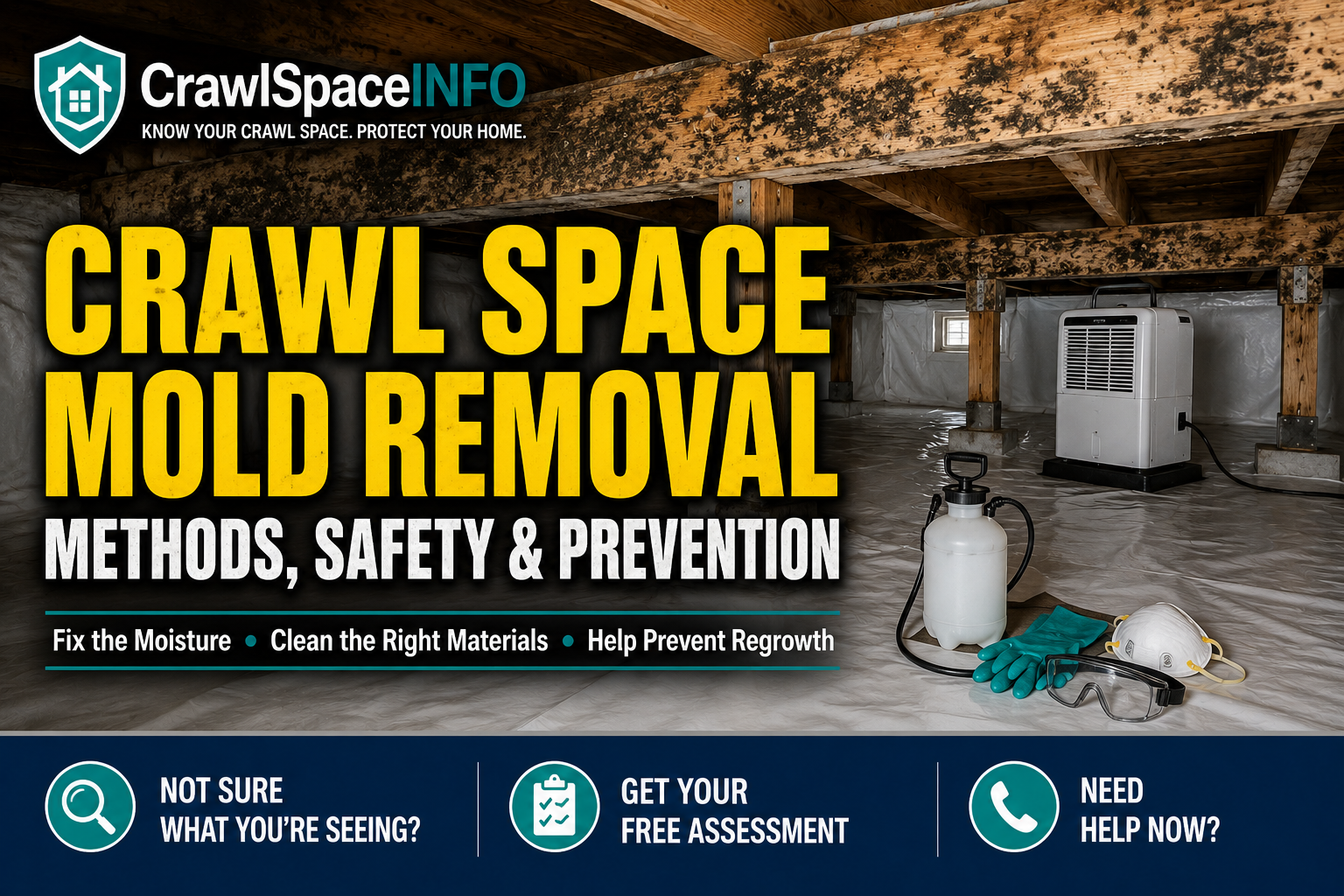
Crawl space mold removal is not simply a matter of making visible growth disappear. A successful cleanup also identifies and corrects the moisture condition that allowed mold to grow, removes or cleans affected materials appropriately, and reduces the chance of the problem returning.
Quick Answer: How Is Mold Removed From a Crawl Space?
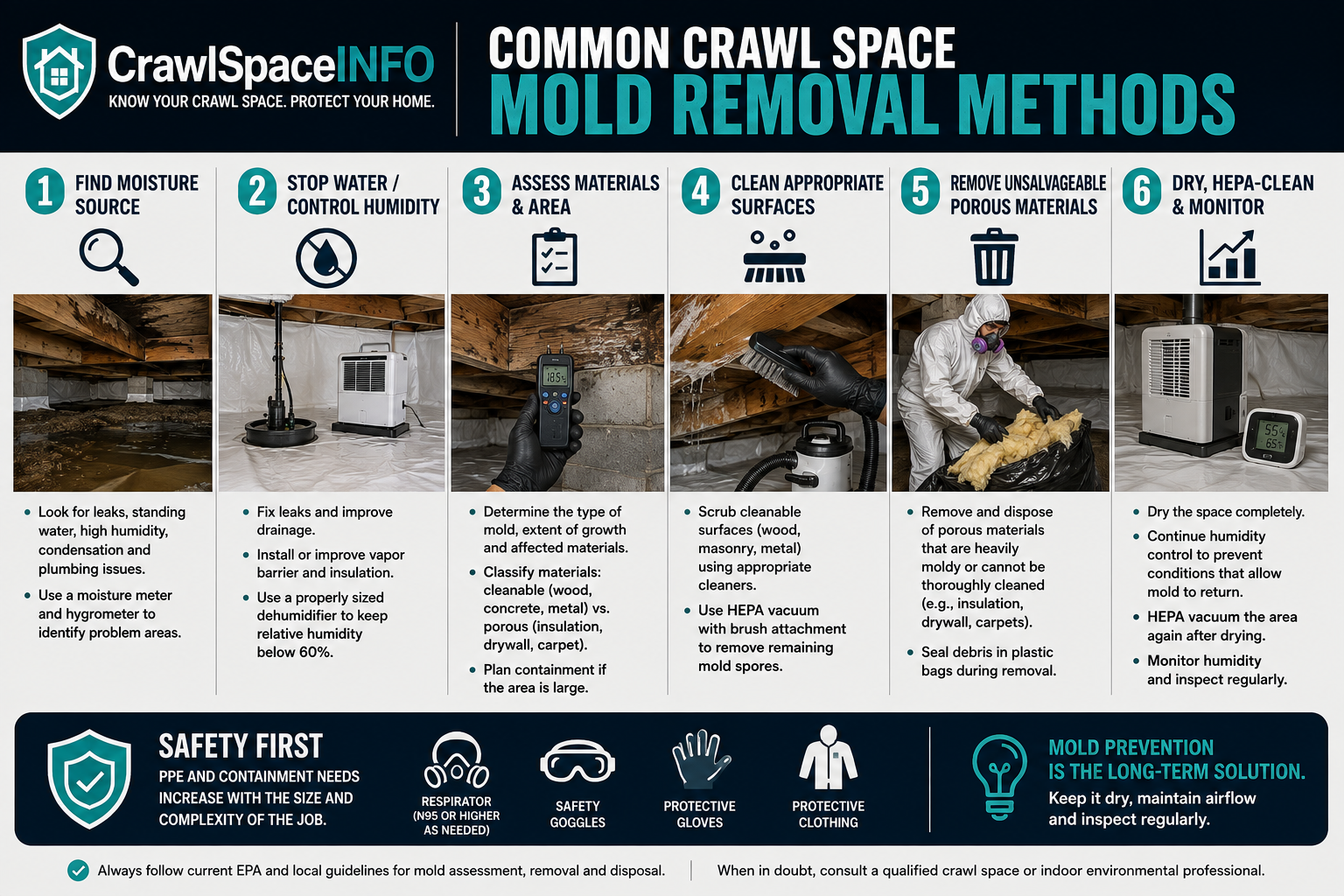
Crawl space mold removal generally involves finding and correcting the moisture source, determining how much material is affected, cleaning appropriate surfaces, removing materials that cannot be adequately cleaned, drying the crawl space, and controlling future moisture. EPA guidance says many small mold areas under about 10 square feet can often be handled by homeowners, while larger contamination, extensive water damage, hidden mold, or situations with significant exposure potential may warrant professional remediation.
What Crawl Space Mold Removal Actually Means
The goal of mold cleanup is not to create a completely mold-free environment. Mold spores naturally exist indoors and outdoors. The practical goal is to remove active growth and contaminated material, clean affected surfaces appropriately, and eliminate the excess moisture that supports continued growth.
That distinction matters in crawl spaces because visible mold is often only one part of the problem. High humidity, plumbing leaks, groundwater, wet insulation, condensation, poor drainage or repeated water intrusion can keep wood and other materials damp enough for mold to return.
Find and Fix the Moisture Source First
Before deciding how to clean the crawl space, determine why the area became damp. Common crawl-space moisture sources include:
- Plumbing or condensate leaks
- Standing water after rain
- Ground moisture evaporating from exposed soil
- Poor exterior grading or short downspouts
- Groundwater entering around the foundation
- High crawl-space humidity
- Condensation on ducts, pipes or framing
- Wet or poorly managed insulation
A mold cleanup project can fail when visible growth is treated but the underlying source remains active. Depending on the cause, moisture control may involve drainage, a sump pump, vapor control, air sealing, dehumidification, plumbing repair or exterior water management.
For broader moisture diagnosis, see Water in Crawl Space, Crawl Space Drainage & Sump Pumps, and Crawl Space Dehumidifiers.
Common Crawl Space Mold Removal Methods
Damp Wiping or Scrubbing
EPA guidance notes that mold can generally be removed from nonporous hard surfaces by wiping or scrubbing with water or water and detergent, followed by thorough drying. Product labels and material-specific instructions should always be followed.
HEPA Vacuuming
HEPA vacuums are commonly used as a final cleanup step after materials have been dried and contaminated material has been removed. They can also help collect settled dust outside the immediate work area. A HEPA vacuum is not a substitute for correcting moisture or for removing material that cannot be adequately cleaned.
Removing Porous Materials
Some porous materials can be difficult or impossible to clean completely after mold growth becomes established. EPA guidance identifies materials such as moldy fiberglass or cellulose insulation as candidates for removal and replacement rather than simple surface cleaning.
Drying the Crawl Space
Cleanup is incomplete if affected materials remain damp. Drying may involve drainage, dehumidification and controlled air movement, depending on conditions. Avoid blindly using fans where active mold is being disturbed, because air movement can increase the spread of spores during remediation.
Does the Removal Method Change by Material?
| Material | Typical Consideration |
|---|---|
| Wood joists and beams | Surface cleaning may be possible when the wood remains structurally sound; moisture conditions and any decay still need evaluation. |
| Concrete or masonry | Hard mineral surfaces can often be cleaned and thoroughly dried, but water pathways through or around the foundation still need correction. |
| Fiberglass insulation | Mold-contaminated fiberglass insulation is generally difficult to clean effectively and may need replacement. |
| Cellulose insulation | Wet or mold-contaminated cellulose insulation is typically removed and replaced. |
| Wood with decay | Cleaning mold does not restore structural capacity lost to fungal decay or deterioration. Damaged framing may require repair or replacement. |
| HVAC or duct materials | Contamination involving air-handling systems deserves extra caution because improper disturbance may distribute material through the building. |
DIY Mold Removal vs. Professional Remediation
EPA’s homeowner guidance uses roughly 10 square feet as one practical threshold: in many cases, a small area below that size may be manageable by a homeowner following appropriate cleanup guidance. That number is not a guarantee that every small crawl-space job is safe or simple.
Professional help becomes more appropriate when there is extensive mold growth, substantial water damage, contamination spread across multiple areas, hidden mold, difficult access, contaminated HVAC components, damaged structural materials, or a significant chance of exposing occupants or workers during cleanup.
Crawl spaces also create practical complications that an ordinary room does not: limited clearance, difficult entry, exposed soil, tight work areas, plumbing and electrical systems, insulation, pests and structural framing can all affect the cleanup plan.
Safety and Personal Protective Equipment
Mold cleanup can disturb spores and contaminated dust. EPA guidance identifies an N95 respirator, gloves and goggles as minimum personal protective equipment for small remediation areas, with greater protection and containment considered as contamination size and exposure potential increase.
More advanced respirator use can involve training, medical clearance and fit testing. Homeowners should not assume that wearing a mask makes every remediation project appropriate for DIY work.
- Avoid direct skin and eye contact with mold and contaminated debris.
- Do not mix cleaning chemicals.
- Follow product labels and manufacturer instructions.
- Use caution around electrical wiring, standing water and mechanical equipment.
- Avoid disturbing suspect contaminated materials unnecessarily.
- Consider professional help when the job exceeds your ability to control dust, exposure and contaminated waste.
How to Keep Crawl Space Mold From Returning
Long-term prevention is primarily a moisture-management problem. Once cleanup is complete, monitor the crawl space for the conditions that supported growth in the first place.
- Keep bulk water out. Correct plumbing leaks, drainage problems, roof runoff and groundwater entry.
- Control ground moisture. Exposed soil can release moisture into the crawl space; an appropriate ground vapor-control strategy may be necessary.
- Manage humidity. A properly selected and drained crawl-space dehumidifier may be part of the solution in sealed or humid crawl spaces.
- Inspect insulation. Wet, fallen or contaminated insulation can hold moisture and hide framing conditions.
- Watch wood moisture. Repeated dampness deserves investigation even after visible mold has been cleaned.
- Reinspect after storms or leaks. A previously dry crawl space can change when exterior drainage, plumbing or groundwater conditions change.
See the Mold in Crawl Space pillar guide for the broader relationship between mold, humidity, water intrusion, wood conditions and prevention.
Not Sure How Serious the Mold or Moisture Problem Is?
Use the CrawlSpaceInfo Free Crawl Space Assessment to organize mold, odor, humidity, water and structural symptoms before deciding what to do next.
Crawl Space Mold Removal FAQs
Can I remove crawl space mold myself?
Some small mold areas may be suitable for homeowner cleanup, but crawl-space access, contamination extent, moisture source, affected material and exposure risk all matter. EPA guidance suggests that mold areas under about 10 square feet can often be handled by homeowners in many situations, while larger or more complicated problems may warrant professional help.
Will mold come back after it is cleaned?
It can. If the water or humidity condition that supported growth remains, mold may return even after visible growth is removed. Moisture control is essential to long-term prevention.
Should moldy crawl space insulation be cleaned or replaced?
Porous insulation can be difficult to clean thoroughly. EPA remediation guidance identifies mold-contaminated fiberglass and cellulose insulation as materials that may need to be discarded and replaced.
Can bleach permanently solve crawl space mold?
No single cleaner solves the underlying moisture problem. The appropriate method depends on the material and contamination. EPA guidance emphasizes cleaning or removing affected materials and correcting moisture rather than relying on a single chemical treatment.
Does mold on a joist mean the wood is structurally damaged?
Not necessarily. Surface mold and structural wood decay are different conditions. Wood that is soft, deteriorated, significantly damaged or associated with floor movement may need a qualified structural assessment.
Do I need mold testing before cleanup?
Visible mold generally indicates that moisture and cleanup need attention, but testing can be useful in some specialized situations. The value of testing depends on the question being asked and should not replace investigation of the moisture source.
Sources & Technical References
- U.S. Environmental Protection Agency — A Brief Guide to Mold, Moisture and Your Home.
- U.S. Environmental Protection Agency — Mold Remediation Guide: Investigating, Evaluating and Remediating Moisture and Mold Problems.
- U.S. Environmental Protection Agency — Water-Damaged Materials and Cleanup Methods.
- U.S. Environmental Protection Agency — Mold Remediation Guidelines and PPE / Containment Considerations.