

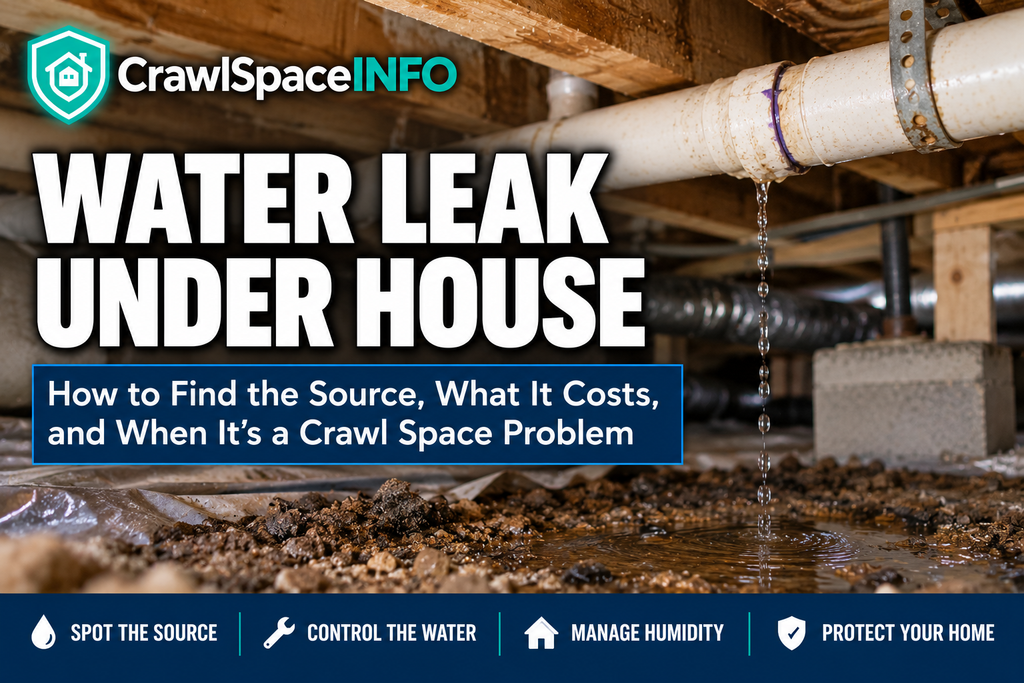
Found water under your house? Use this guide to determine whether the source is plumbing, groundwater, drainage, or condensate, what to check first, what repairs may cost, and when the problem needs professional attention.
Quick Answer
A water leak under a house is not always a plumbing problem. If the area gets wet during dry weather, plumbing or HVAC sources move higher on the list. If it appears mainly after storms, drainage, grading, or groundwater may be responsible. A minor accessible plumbing repair may cost a few hundred dollars, while cleanup, mold, insulation, or structural damage can push the total into the thousands. Identify the source before paying for repairs.
Not Sure Where the Water Is Coming From?
Answer a few questions about when the water appears, what else you are seeing, and how severe the problem seems.
Signs You May Have a Water Leak Under Your House
Some leaks are obvious. Others can continue for weeks before a homeowner realizes there is a problem.
Common warning signs include:
- Standing water beneath the house
- Unusually damp soil
- Dripping or spraying pipes
- Wet insulation
- Musty odors
- Mold-like growth
- Warped or soft flooring
- Unexplained increases in the water bill
- Sounds of running water when fixtures are off
- Recurring moisture during otherwise dry weather
A key clue is when the water appears.
If the crawl space gets wet mainly after storms, crawl space waterproofing and exterior drainage problems become more likely than an active plumbing leak.
If water appears during dry weather, plumbing, HVAC condensate, or another continuous source moves higher on the list.
Water Leak or Groundwater? How to Tell the Difference
Not every puddle beneath a house is a plumbing leak. Before calling a plumber, look for patterns.
Signs That Point Toward a Plumbing Leak
Water may be coming from plumbing if:
- The problem occurs even when it has not rained
- Moisture is concentrated beneath a kitchen, bathroom, laundry room, or water heater
- A pipe is visibly dripping
- The water meter moves when no water is being used
- Your water bill suddenly increases
- The water appears relatively clean
- You hear hissing or running water beneath the floor
Signs That Point Toward Drainage or Groundwater
Exterior water becomes more likely if:
- The problem appears after heavy rain
- Water collects near foundation walls
- Gutters overflow
- Downspouts discharge close to the house
- The yard slopes toward the foundation
- Multiple areas of the crawl space become wet at once
How to Find a Water Leak Under a House
Start with the least invasive checks.
1. Turn Off Water-Using Fixtures
Make sure faucets, toilets, washing machines, dishwashers, irrigation, and other water-consuming fixtures are not running.
Then check the water meter. If it continues to show usage, you may have an active leak somewhere in the plumbing system.
2. Look Beneath Wet Rooms
If it is safe to inspect the crawl space, look beneath:
- Bathrooms
- Kitchens
- Laundry rooms
- Water heaters
- Exterior hose connections
- HVAC equipment
Leaks often originate near plumbing fixtures even when the water eventually spreads elsewhere.
3. Check Supply Pipes
Supply-line leaks may drip continuously because the pipes remain pressurized.
Look for:
- Beads of water
- Corrosion
- Staining
- Active dripping
- Split fittings
- Damaged valves
4. Check Drain Pipes
Drain leaks can be harder to spot because they may leak only when a fixture is used.
Have someone run one fixture at a time while the area is inspected. If water appears only when a shower, sink, washing machine, or toilet is used, the drain system may be involved.
5. Check HVAC Condensate
Air-conditioning systems remove moisture from the air and normally route that water through a condensate drain.
A blocked, disconnected, or damaged condensate line can release water into or near the crawl space.
6. Compare the Problem With Recent Weather
If the water appears only after storms, do not assume a pipe is leaking.
Inspect:
- Gutters
- Downspouts
- Grading
- Foundation drainage
- Low spots beside the house
When Should You Shut Off the Water?
If you can see active spraying, rapid dripping, or a growing pool of water from a plumbing line, shutting off the appropriate fixture valve or the home’s main water supply may prevent additional damage.
For a significant or unclear leak, a licensed plumber is usually the appropriate professional to identify and repair the plumbing source.
What Does a Water Leak Under a House Cost to Fix?
The cost to fix a water leak under a house depends on where the leak is located, how easy it is to reach, whether the damaged pipe or drain needs a simple repair or replacement, and how much moisture damage occurred before the leak was discovered.
A small accessible plumbing repair may cost a few hundred dollars. A leak that has soaked insulation, damaged framing, caused mold growth, or requires significant pipe replacement can cost several thousand dollars.
| Repair or Damage | Broad Planning Range* |
|---|---|
| Minor accessible plumbing repair | About $200–$500+ |
| More involved plumbing or pipe repair | About $500–$2,000+ |
| Crawl-space water removal and drying | About $500–$3,000+ |
| Wet insulation removal / replacement | About $1,000–$4,000+ |
| Mold remediation | About $1,500–$6,000+ |
| Structural wood or subfloor repair | About $2,000–$15,000+ |
*Broad planning ranges only. Actual costs vary significantly by location, access, pipe material, extent of damage, contractor rates, and the work required.
What Makes a Water Leak Under a House More Expensive?
Costs tend to increase when:
- The crawl space is very low or difficult to access
- A long section of pipe needs replacement rather than a small fitting repair
- The leak is inside or above finished flooring
- Drain or sewer piping is involved
- Insulation has become saturated or contaminated
- Mold remediation is required
- Floor joists, beams, subflooring, or other structural wood has deteriorated
- The leak went unnoticed for an extended period
This is why diagnosing the source early matters. A relatively small plumbing leak can become a much more expensive crawl-space repair when surrounding materials remain wet.
What Happens After the Leak Is Fixed?
Stopping the leak is only the first step.
Wet crawl-space materials should be dried promptly because prolonged moisture can support mold growth and damage building materials.
If the space remains damp after the leak is repaired, see our guide to crawl space moisture for the most common causes of lingering humidity and moisture.
After the plumbing repair, inspect:
- Soil or vapor barrier
- Insulation
- Floor joists
- Subfloor
- HVAC ducts
- Wood supports
- Stored materials
If those areas remain wet, the crawl space itself may need additional drying or remediation.
When Does a Plumbing Leak Become a Crawl Space Problem?
A small pipe leak can become a crawl-space problem when the water affects the surrounding environment.
Warning signs include:
- Persistent high humidity
- Musty odor
- Wet fiberglass insulation
- Visible fungal growth
- Condensation on ducts or pipes
- Soft or discolored wood
- Recurring moisture after the plumbing repair
If you see visible growth or persistent musty odors, review our Mold in Crawl Space guide for causes, cleanup considerations, costs, and prevention.
At that point, simply fixing the pipe may not be enough.
Use the free assessment before comparing repairs or contractor estimates.
Do You Need Encapsulation After a Water Leak?
Not automatically.
A one-time plumbing leak does not mean every crawl space suddenly needs full encapsulation.
If the crawl space was otherwise dry and the plumbing problem was corrected quickly, drying and replacing damaged materials may be sufficient.
Encapsulation becomes more relevant when there is a broader moisture-management problem such as:
- Recurring groundwater
- Persistent high humidity
- Exposed soil moisture
- Repeated condensation
- Chronic dampness
- Uncontrolled exterior water entry
The repair should match the actual cause.
Can a Dehumidifier Fix the Problem?
A dehumidifier can help control humidity after the liquid-water source has been corrected.
It should not be used as a substitute for fixing an active pipe leak or ongoing water intrusion.
Is a Water Leak Under the House Covered by Homeowners Insurance?
Sometimes, but the cause matters.
Policies may treat sudden and accidental plumbing damage differently from gradual leakage, maintenance problems, groundwater, flooding, or long-term deterioration.
Do not assume coverage based only on the fact that water is present.
Document the condition with photos, note when it was discovered, identify the apparent source if possible, and contact the insurer for guidance based on the specific policy.
What Should You Do First?
If you discover water beneath your house:
- Determine whether there is an active plumbing leak.
- Shut off the water if necessary and safe.
- Avoid entering unsafe standing water.
- Identify whether the source is plumbing, rainwater, groundwater, or condensate.
- Repair the source.
- Remove standing water.
- Dry wet materials.
- Inspect for lingering moisture damage.
- Address the crawl-space environment if moisture remains.
Frequently Asked Questions
Why is there water under my house when it hasn’t rained?
Plumbing leaks, drain-line leaks, HVAC condensate problems, and groundwater can all cause water beneath a house during dry weather. Our Water in Crawl Space guide explains how to separate plumbing-related water from broader crawl-space moisture problems.
How do I know whether a pipe is leaking under my house?
Check the water meter when all fixtures are off, inspect beneath bathrooms and kitchens, and look for continuous dripping, wet insulation, corrosion, or water that appears regardless of weather.
Can a small leak cause crawl-space mold?
Yes. Persistent dampness can create conditions that support mold growth, which is why fixing the source and drying the area promptly matters.
Who should I call for water under my house?
If an active plumbing leak is suspected, start with a licensed plumber. If the plumbing has been repaired but the crawl space remains wet, you may also need a crawl-space, water-remediation, or structural professional depending on the damage.
Does every water leak require crawl-space encapsulation?
No. Encapsulation should address an ongoing moisture-management problem, not be treated as an automatic response to every isolated leak.
How much does a water leak under a house cost to repair?
A minor accessible plumbing repair may cost a few hundred dollars, while a more involved leak with water removal, insulation damage, mold, or structural repairs can cost several thousand dollars or more. The total depends on both the plumbing repair and any resulting crawl-space damage.
Not Sure What’s Causing the Problem?
Use the CrawlSpaceInfo Free Crawl Space Assessment Tool to organize the symptoms, narrow the likely cause and severity, and get a clearer next step before choosing a repair.