

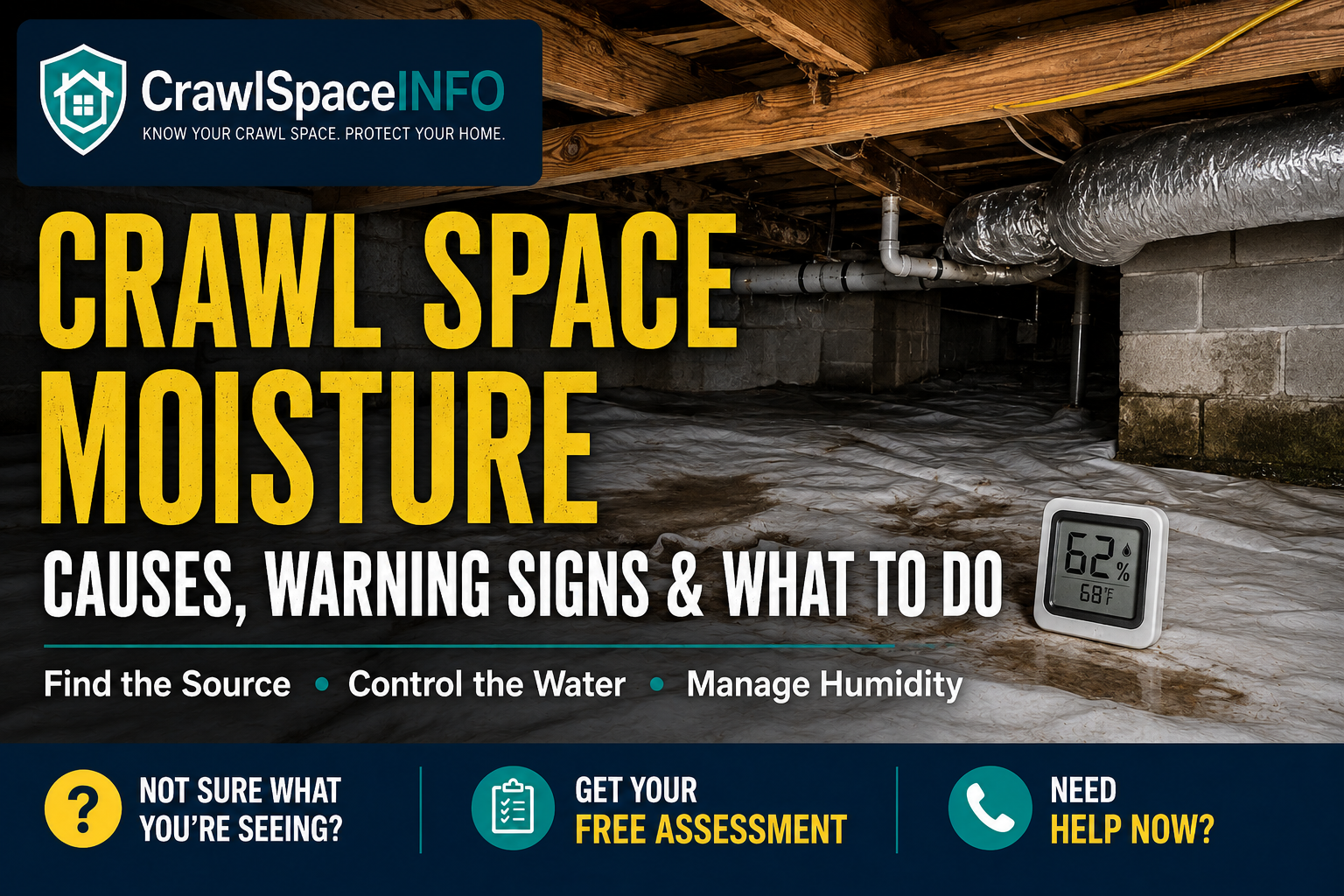
Crawl space moisture can come from the ground, rain and groundwater, plumbing leaks, condensation, humid outdoor air or mechanical equipment. If you are seeing moisture in a crawl space, the right fix depends on identifying which source—or combination of sources—is actually making the space damp.
Quick Answer: What Causes Crawl Space Moisture?
Crawl space moisture usually comes from one or more of four pathways: liquid water, ground vapor, humid air and condensation. Common sources include poor grading, roof runoff, groundwater, plumbing leaks, exposed soil, torn or missing vapor barriers, humid outdoor air entering through vents, and condensation on cooler framing, ducts or pipes. The solution should address the source first rather than treating “moisture” as one single problem.
What Does Moisture in a Crawl Space Actually Mean?
Moisture is broader than standing water. A crawl space can look dry and still have a moisture problem if the air is humid, the soil is releasing water vapor, insulation is damp, condensation is forming on cool surfaces or wood is repeatedly absorbing moisture.
EPA guidance explains that foundations are exposed to rain-soaked soil, groundwater, plumbing leaks and condensation risk. Crawl spaces are especially vulnerable because they have extensive contact with soil and can receive moisture from both outside and inside the building.
If you have standing or flooding water in the crawl space, see our dedicated Water in Crawl Space guide. This article focuses on the broader moisture problem, including vapor, humidity, condensation and damp materials—not only visible liquid water.
What Causes Moisture in a Crawl Space?
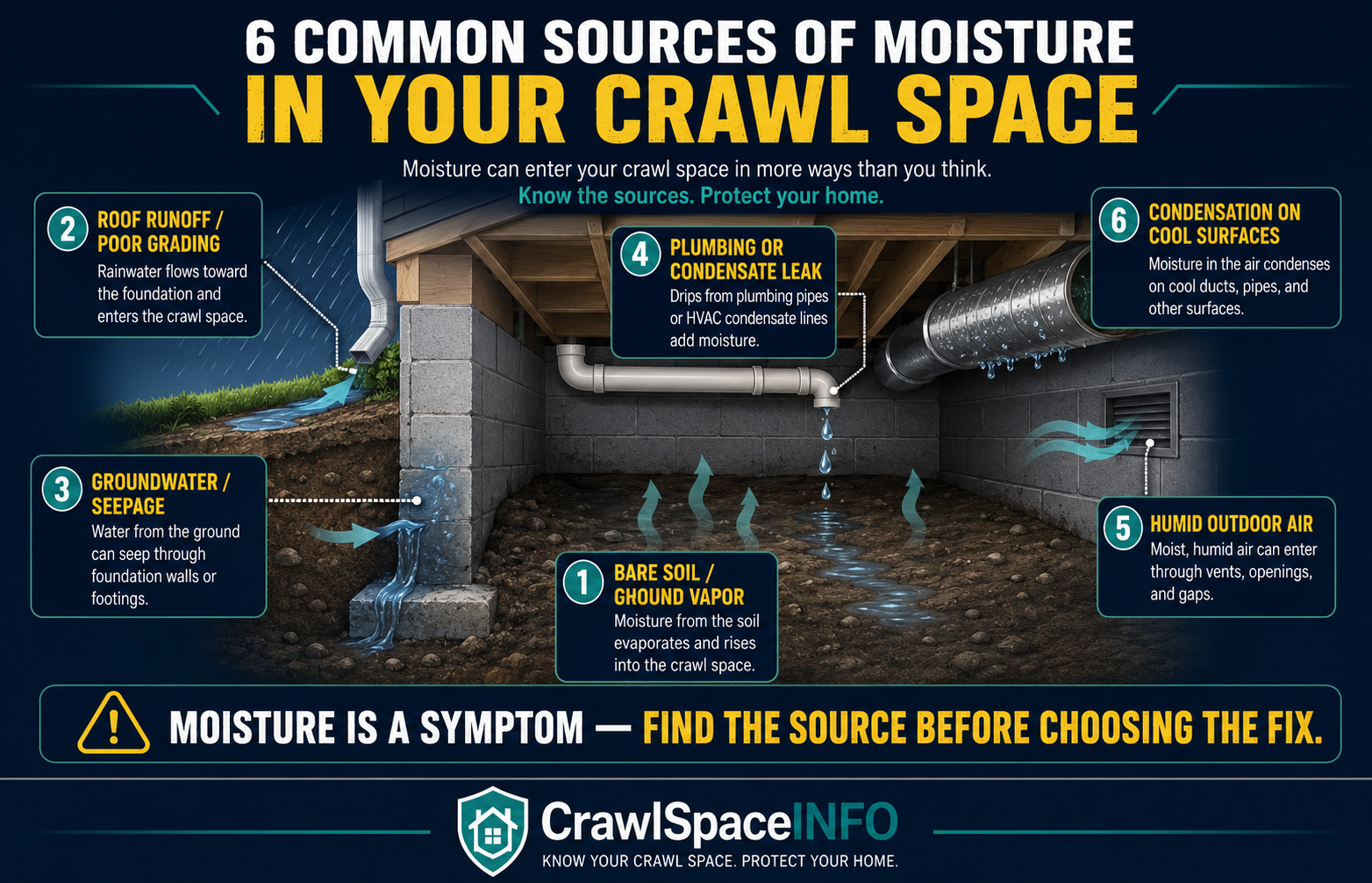
1. Ground Moisture From Bare Soil
Bare earth can release substantial water vapor into a crawl space. EPA notes that soil can wick moisture by capillary action and then release that moisture into crawl-space air through evaporation. A continuous ground vapor barrier is one of the main controls for this pathway.
2. Rainwater and Roof Runoff
Short downspouts, clogged gutters, negative grading and hard surfaces that slope toward the house can send rainwater toward the foundation. EPA moisture-control guidance recommends managing water outside the foundation and sloping the surrounding grade away from the building.
3. Groundwater and Seepage
High water tables, saturated soil or seasonal groundwater can allow water to enter beneath or around the foundation. Low areas may need perimeter drainage, a sump system or other bulk-water management before sealing or insulating the crawl space.
4. Plumbing or Mechanical Leaks
Leaking pipes, HVAC condensate, open sump pits and incorrectly drained equipment can add water directly to the crawl space. These sources should be corrected rather than managed only with dehumidification.
5. Humid Outdoor Air
In humid climates, outside air entering a vented crawl space can increase rather than decrease moisture. DOE Building America guidance notes that warm humid air can condense on cooler floor joists and other crawl-space surfaces.
6. Condensation
Condensation occurs when humid air contacts a surface cold enough for water vapor to become liquid. Ducts, pipes, foundation walls and framing can all become condensation surfaces under the right temperature and humidity conditions.
Crawl Space Moisture Problems: Warning Signs to Watch For
| What You Notice | What It May Suggest |
|---|---|
| Musty odor | Persistent dampness or microbial growth somewhere in the crawl space. |
| Condensation on ducts or pipes | High humidity combined with cool surface temperatures. |
| Wet or sagging insulation | Leak, high humidity, condensation or repeated water exposure. |
| Water stains on foundation walls | Past or recurring liquid-water entry. |
| Standing water or muddy soil | Drainage, groundwater, plumbing or runoff problem. |
| Visible mold or fungal growth | Moisture has remained high enough to support biological growth. |
| Soft or deteriorated wood | Long-term moisture exposure may have progressed beyond a surface condition. |
| Rust on metal supports or fasteners | Chronic humidity or repeated wetting. |
DOE’s homeowner crawl-space inspection guidance specifically calls out wet insulation, mold or mildew, bad odors, water leaks, standing water, missing or damaged vapor barriers and ventilation problems as signs that deserve investigation.
Why Crawl Space Moisture Matters
Persistent moisture can support mold growth, damage insulation, corrode metal, contribute to wood deterioration and create conditions that are harder to correct later. EPA notes that uncontrolled moisture can lead to mold and, when wet-wood conditions persist long enough, can contribute to structural damage.
Moisture can also move between the crawl space and the rest of the building through cracks, openings and air movement. That does not mean every damp crawl space is creating an indoor-air problem upstairs, but it is another reason to treat crawl-space moisture as part of the whole building rather than an isolated dirt-floor area.
How to Find the Source of Moisture in a Crawl Space
- Look for liquid water first. Check plumbing, condensate drains, sump pits, wall seepage and low spots.
- Inspect the exterior. Look at gutters, downspouts, soil slope and where roof water discharges.
- Check the ground cover. Bare soil, tears, open seams and poorly sealed edges can allow substantial vapor entry.
- Look for condensation. Pay attention to ducts, cold water pipes, foundation walls and framing.
- Measure relative humidity. A hygrometer can help show whether the crawl space remains humid over time.
- Document when it happens. Moisture that appears after storms points to a different cause than humidity that remains high through hot summer weather.
How to Fix Moisture in a Crawl Space
Control Roof and Surface Water
Keep gutters functioning, direct downspouts away from the foundation and correct grading that sends water toward the home. Surface-water control is usually the first line of defense.
Manage Groundwater and Bulk Water
Recurring seepage or groundwater may require perimeter drainage, a sump pump or other water-management system. DOE guidance recommends correcting drainage and bulk-water problems before converting or sealing a crawl space.
Cover Bare Ground
DOE Building America recommends a continuous polyethylene ground cover to reduce ground moisture. Its guidance commonly calls for at least 6-mil polyethylene, with seams overlapped and sealed and the material extended up walls and piers as part of a continuous system.
Repair Plumbing and Condensate Problems
Leaks should be fixed at the source. Dehumidification can help with airborne moisture, but it is not an appropriate substitute for an active leak.
Choose the Right Crawl Space Strategy
A vented crawl space and a properly designed unvented crawl space manage moisture differently. DOE guidance for unvented systems includes air sealing, wall insulation, ground vapor control and verification of drainage and water management before the space is enclosed.
For deeper guides, see Crawl Space Vapor Barrier, Crawl Space Waterproofing, and Crawl Space Drainage & Sump Pumps.
What Humidity Level Is Too High in a Crawl Space?
EPA recommends keeping indoor relative humidity below 60% where possible, with 30% to 50% often cited as an ideal indoor range. A crawl space is not identical to finished living space, but persistent humidity near or above 60% is a useful warning that moisture control deserves attention.
In a properly sealed crawl space, a dehumidifier may be used to maintain humidity when passive drying is not enough. DOE Building America guidance also notes that supplemental dehumidification may be needed in enclosed crawl spaces when humidity remains elevated.
See our Crawl Space Dehumidifiers guide for sizing, drainage and installation considerations.
When Should You Call a Professional?
Professional evaluation becomes more appropriate when moisture is extensive, recurring or connected to structural, electrical or mold-related concerns.
- Standing water returns after storms.
- There is significant mold growth or contaminated insulation.
- Wood is soft, rotted or associated with sagging floors.
- Foundation walls show cracks, bowing or repeated seepage.
- You cannot determine whether the source is drainage, groundwater, condensation or plumbing.
- The repair may require excavation, sump installation, structural work or major electrical changes.
Not Sure Where the Moisture Is Coming From?
Use the CrawlSpaceInfo Free Crawl Space Assessment to organize water, humidity, odor, mold and structural symptoms before deciding what to fix first.
Crawl Space Moisture FAQs
Is some moisture in a crawl space normal?
Small temporary changes can occur with weather and temperature, but persistent high humidity, condensation, wet insulation, water staining, mold or standing water should not be treated as normal operating conditions.
Will a dehumidifier fix crawl space moisture?
Only if airborne humidity is the main remaining problem. A dehumidifier does not repair plumbing leaks, roof runoff, groundwater entry or failed drainage.
Does a dirt crawl space need a vapor barrier?
Ground vapor control is a core moisture-management measure. DOE Building America guidance recommends polyethylene ground cover in crawl spaces to reduce moisture and soil-gas entry.
Can crawl space vents cause moisture?
In humid climates, outside air entering through vents can condense on cooler crawl-space surfaces. Whether a crawl space should be vented or unvented depends on the overall assembly, climate, code and moisture-control strategy.
What should crawl space humidity be?
EPA recommends indoor relative humidity below 60% where possible. Persistent crawl-space humidity near or above that level is a useful sign that moisture control should be investigated.
Can crawl space moisture damage floor joists?
Long-term wetting can support mold and wood deterioration. Soft, decayed or structurally compromised wood needs more than moisture control alone and may require structural evaluation.
Sources & Technical References
- U.S. Environmental Protection Agency — Moisture Control Guidance for Building Design, Construction and Maintenance.
- U.S. Environmental Protection Agency — Mold Course, Chapter 2: Crawl Spaces.
- U.S. Environmental Protection Agency — What Are the Main Ways to Control Moisture in Your Home?
- U.S. Department of Energy Building America Solution Center — Vented to Unvented Crawl Space.
- U.S. Department of Energy Building America Solution Center — Look at Crawlspace for Moisture Issues.