

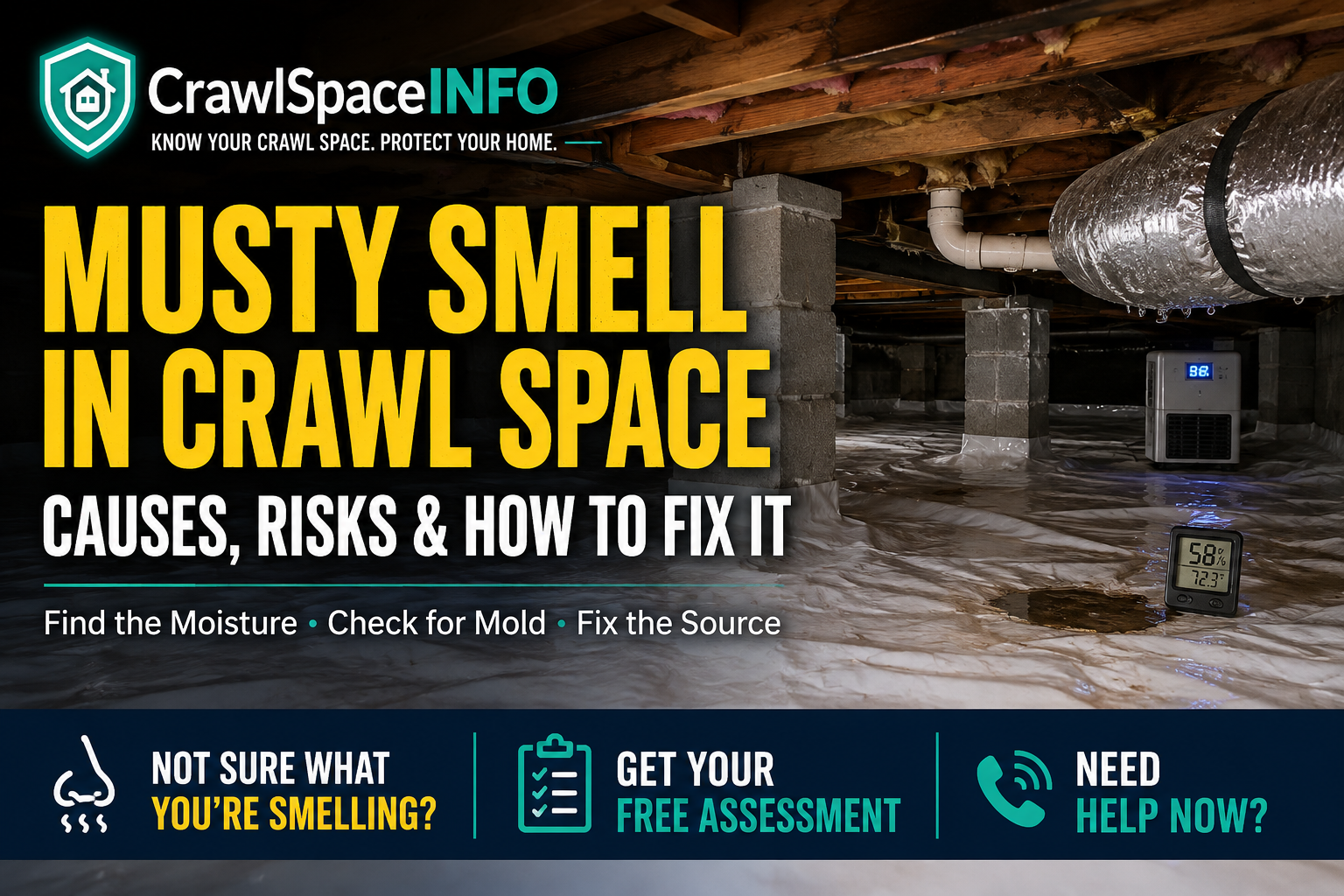
If your crawl space smells musty, moisture is usually the first thing to investigate. Mold can be one cause, but damp soil, wet insulation, plumbing leaks, condensation, standing water and persistently high humidity can also create or contribute to crawl space odor.
Quick Answer: Why Does My Crawl Space Smell Musty?
If your crawl space smells musty, treat the odor as a moisture warning. EPA guidance says moldy or musty odors can indicate hidden mold and should be investigated, but odor alone does not identify the exact source. Start by checking for water entry, plumbing leaks, condensation, wet insulation, exposed soil, damaged vapor barriers and high humidity. To get rid of the musty smell in a crawl space, fix the moisture source first; deodorizing the space without correcting the cause is unlikely to provide a durable solution.
What Does It Mean When a Crawl Space Smells Musty?
A musty or earthy odor is not a diagnosis by itself. It is evidence that the crawl space deserves a closer moisture inspection.
Homeowners describe the same problem in several ways: crawl space odor, crawl space musty smell, musty odor in crawl space, or simply that the crawl space smells like mildew. These phrases usually point to the same diagnostic question: what is keeping the space damp enough to create the odor?
The U.S. Environmental Protection Agency explains that some molds produce microbial volatile organic compounds that can create the familiar moldy or musty odor. EPA also advises investigators to pay attention to damp or musty odors because they suggest water is or was present and mold growth may be occurring.
Common Causes of Crawl Space Musty Smells
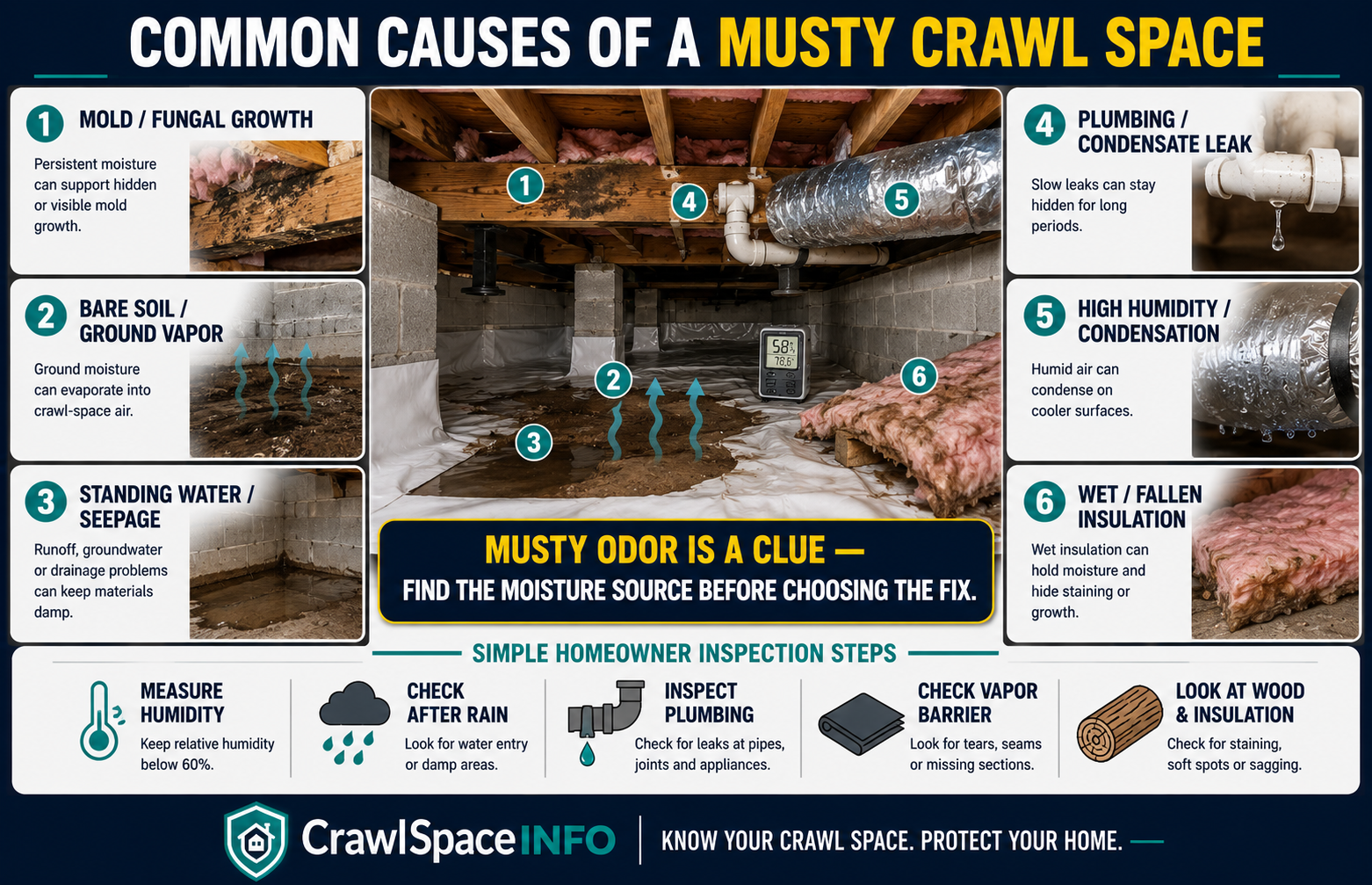
1. Mold or Fungal Growth
Mold can grow on damp wood, paper-faced materials, insulation debris and other organic surfaces when moisture remains available. The growth may be visible, but it can also be hidden behind insulation, above the subfloor or around utility penetrations.
2. Bare Soil and Ground Moisture
EPA’s crawl-space guidance notes that soil can wick moisture and release it into crawl-space air through evaporation. A dirt floor can therefore contribute substantial moisture even when there is no obvious puddle.
3. Standing Water or Recurring Seepage
Rain runoff, poor grading, groundwater or foundation seepage can leave soil and building materials damp. If the odor becomes stronger after storms, exterior drainage and water entry should be high on the inspection list.
4. Plumbing or Condensate Leaks
A slow supply-line leak, drain leak, HVAC condensate problem or leaking fixture above the crawl space can keep one area damp for weeks without being obvious from inside the home.
5. High Humidity and Condensation
Humid air can raise moisture levels even without standing water. When that air contacts cooler pipes, ducts, masonry or framing, condensation can form and repeatedly wet nearby materials.
6. Wet or Fallen Insulation
Wet fiberglass or other absorbent materials can hold moisture, trap debris and hide staining or fungal growth. Insulation that is sagging, wet or visibly contaminated should be investigated rather than simply pushed back into place.
Does a Musty Smell in a Crawl Space Mean Mold?
It can, but not automatically. EPA says a moldy odor suggests mold growth and should be investigated. At the same time, a crawl space may contain damp soil, wet insulation, stagnant water or decaying materials that contribute unpleasant odors without a visible mold colony being the only cause.
Do not rely on color or smell to identify a mold species. If visible growth is present, the durable solution still begins with correcting the water or moisture source.
For the broader mold topic, see Mold in Crawl Space and Crawl Space Mold Removal.
How to Find the Source of Crawl Space Odor
- Measure relative humidity. Use a hygrometer and record conditions over time instead of relying only on how the crawl space feels.
- Look for liquid water. Check low spots, foundation walls, soil, sump areas and the crawl-space entrance.
- Inspect after rain. A dry crawl space on a sunny day may hide a runoff or groundwater problem that appears only during storms.
- Check plumbing and condensate lines. Look under bathrooms, kitchens, laundry areas and HVAC equipment.
- Inspect the ground cover. Look for exposed soil, tears, open seams, missing sections and water trapped on top of the liner.
- Check insulation. Look for wet, sagging, fallen, discolored or mold-contaminated material.
- Inspect wood framing. Note dark staining, visible growth, soft wood or recurring dampness on joists, beams and subflooring.
- Check exterior drainage. Gutters, downspouts and grading should move water away from the foundation rather than concentrate it beside the house.
How to Get Rid of Musty Smell in a Crawl Space
The goal is not to mask the odor. The goal is to remove the conditions producing it. If you are searching for how to get rid of crawl space smell or how to remove musty smell from a crawl space, the durable answer is the same: identify the moisture pathway, correct it, then dry or address affected materials.
Fix Active Leaks First
Repair plumbing leaks, condensate problems and other direct water sources before adding humidity-control equipment.
Control Rainwater and Groundwater
Depending on the cause, this may involve gutter repair, downspout extensions, grading corrections, perimeter drainage, a sump system or another bulk-water strategy. EPA moisture-control guidance emphasizes controlling water at the building exterior and correcting water entry.
Control Ground Vapor
Exposed soil can release water vapor into the crawl space. A properly installed ground vapor barrier can reduce this pathway. More comprehensive systems may extend and seal the liner at walls, piers and penetrations as part of an encapsulation strategy.
Dry and Address Wet Materials
EPA recommends drying wet materials quickly and correcting the moisture source. Moldy or badly water-damaged absorbent materials may need removal or replacement depending on the material and extent of contamination.
Control Remaining Humidity
Once bulk water, leaks and major ground-moisture pathways are addressed, a properly selected dehumidifier may help maintain lower humidity in an enclosed crawl space.
Will a Dehumidifier Get Rid of Crawl Space Smell?
A dehumidifier can help when excessive airborne humidity is part of the problem, but it should not be used as a substitute for repairing an active leak, standing groundwater or failed drainage.
EPA generally recommends keeping indoor relative humidity below 60% where possible, with 30% to 50% often cited as an ideal indoor range. Crawl spaces are not identical to finished living areas, but persistent humidity near or above 60% is a useful warning that moisture control deserves attention.
See our Crawl Space Dehumidifiers guide for sizing, drainage and installation considerations.
Does a Musty Crawl Space Need Encapsulation?
Not every musty crawl space automatically needs full encapsulation. Encapsulation may be appropriate when the problem involves recurring ground moisture, uncontrolled humid-air entry or a crawl-space assembly that benefits from a sealed moisture-control approach.
Before paying for encapsulation, ask what specific moisture pathway the proposal is correcting. Drainage, plumbing repair or groundwater control may need to happen first.
See Crawl Space Encapsulation, Crawl Space Vapor Barrier, and Crawl Space Drainage & Sump Pumps.
When Should You Call a Professional?
Professional evaluation becomes more appropriate when the odor is persistent and the underlying condition is extensive, recurring or difficult to identify.
- Standing water returns after storms.
- There is extensive visible mold or contaminated insulation.
- Wood feels soft, decayed or is associated with sagging floors.
- The crawl space contains sewage, electrical hazards or unsafe access conditions.
- You cannot determine whether the source is groundwater, drainage, condensation or plumbing.
- A repair may require excavation, sump installation, mold remediation or structural work.
Not Sure What Is Causing the Musty Smell?
Use the CrawlSpaceInfo Free Crawl Space Assessment to organize odor, humidity, water, mold and structural symptoms before deciding what to fix first.
Crawl Space Musty Smell & Odor FAQs
Is a musty smell in a crawl space normal?
A persistent musty odor should not be treated as normal. It is a useful warning that dampness, water entry, high humidity, mold growth or another moisture-related condition may be present.
Can a crawl space smell musty without visible mold?
Yes. Mold can be hidden, and other damp materials can also create unpleasant odors. A visual inspection should include insulation, the underside of the subfloor, framing, plumbing areas and other concealed locations.
Can the musty smell come into the house?
Moisture and air can move between a crawl space and other parts of the building through cracks and openings. If a musty odor is strongest on the first floor or around penetrations, the crawl space is worth investigating.
Will a vapor barrier stop crawl space odor?
A vapor barrier can reduce moisture coming from exposed soil, but it will not repair a plumbing leak, groundwater problem, wet insulation or existing mold by itself.
Will a dehumidifier get rid of the smell?
It may help if high humidity is the remaining cause, but the source of bulk water or active leaks should be corrected first.
Should I spray bleach or deodorizer in the crawl space?
Masking odor does not correct the moisture source. EPA guidance emphasizes moisture control and appropriate cleanup of affected materials rather than relying on odor-covering products.
Sources & Technical References
- U.S. Environmental Protection Agency — What Does Mold Smell Like?
- U.S. Environmental Protection Agency — Mold Course, Chapter 3: Evaluating Mold Growth
- U.S. Environmental Protection Agency — Mold Course, Chapter 2: Crawl Spaces
- U.S. Environmental Protection Agency — A Brief Guide to Mold, Moisture and Your Home
- U.S. Environmental Protection Agency — The Key to Mold Control Is Moisture Control
- U.S. Department of Energy Building America Solution Center — Look at Crawlspace for Moisture Issues